
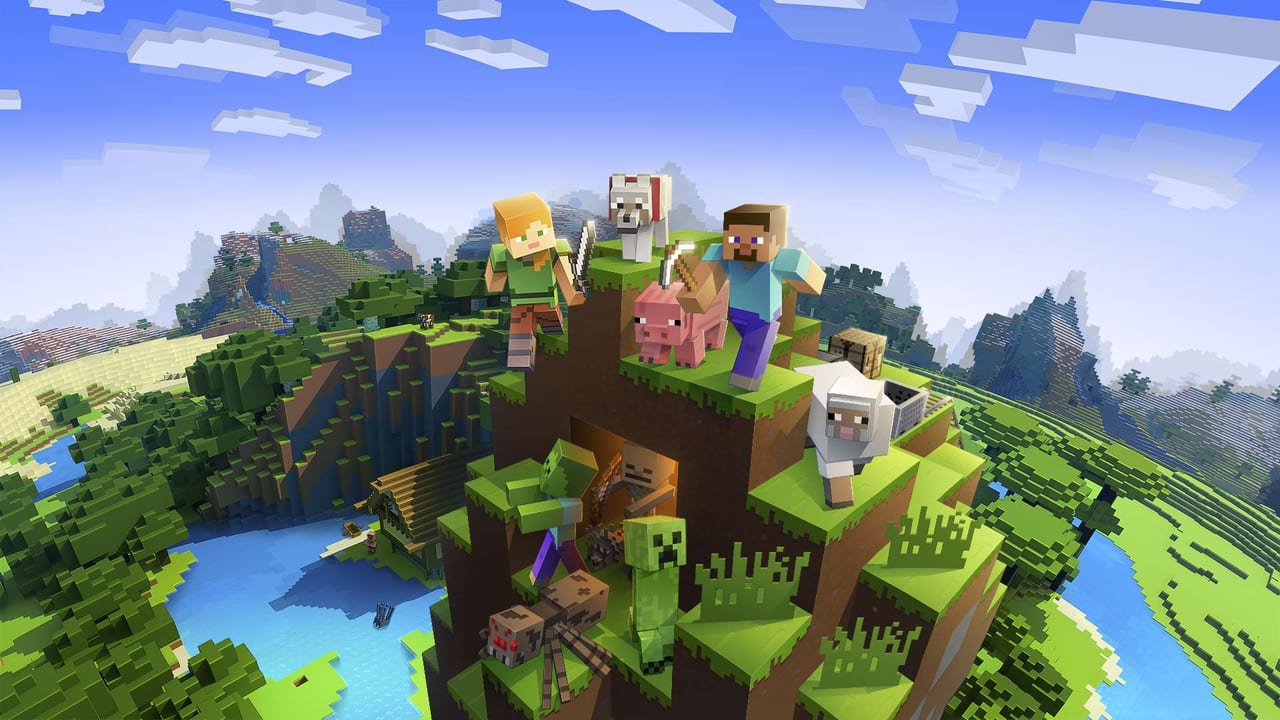
Game images by RAWG
Minecraft
Mojang Studios
About This Game
Super ReviewMinecraft is a robust creative sandbox where children build anything they imagine, learn problem-solving, and collaborate with friends. Its open-ended nature sparks immense imagination but parents should guide online interactions and set play limits to manage its endless appeal.
Super Review
Parent verdict
Minecraft is a highly recommended experience for families seeking a game that fosters creativity, spatial reasoning, and collaborative play, especially for children 9 and up. The health score of 79 reflects its substantial benefits, like educational potential and low monetization pressure, balanced against typical online social risks and its deeply engaging, potentially time-consuming nature. It's a fantastic fit when managed with clear family rules regarding screen time and online conduct.
What players actually do
- Players mine resources like wood, stone, and minerals, practicing resource management and planning as they gather materials for crafting.
- Players construct intricate buildings, landscapes, and contraptions block by block, fostering engineering skills, spatial awareness, and design thinking.
- Players explore vast, procedurally generated worlds, encountering diverse biomes, animals, and mild fantasy monsters, which encourages curiosity and navigational skills.
Where it shines
- The game's unmatched creative freedom allows children to manifest complex ideas into tangible structures, from simple homes to elaborate cities, making it a powerful tool for self-expression.
- Minecraft naturally encourages problem-solving and critical thinking, whether players are figuring out how to build an automatic farm, navigating a treacherous cave, or collaborating on a large-scale project.
Parent watch-outs
- While combat is mild fantasy violence, online multiplayer can expose children to unfiltered chat from other players, making supervision or restricted server access important.
- Minecraft's open-ended nature and constant stream of new projects can make it difficult for children to disengage, leading to potential overuse without clear time boundaries.
Family rules worth setting
- Set specific time limits for gameplay sessions, especially for younger children, and discuss the importance of balancing screen time with other activities.
- Establish rules for online interactions, such as only playing on private servers with known friends or using parent-approved servers with strong moderation.
Talk about this
- Discuss what your child is building or creating, asking about their design choices and problem-solving strategies to reinforce their learning.
- Talk about appropriate online behavior and digital citizenship, emphasizing kindness, respect, and when to report concerning interactions or content.
Play style
Minecraft offers a flexible rhythm, from short creative bursts to longer survival sessions. Difficulty in Survival mode can be adjusted, and children may need help understanding crafting recipes or surviving their first nights. It supports extensive solo play, but shines in cooperative building and exploration with friends, either locally or online, promoting teamwork and communication.
Score Breakdown
Positive Aspects
Risk Factors
Why this rating
Educational Value
4/5Minecraft inherently teaches concepts like resource management, basic engineering, and spatial reasoning as players gather materials and construct complex structures. Its open-ended nature encourages experimentation and problem-solving through play.
Addictive Monetization
1/5As a premium, one-time purchase game, Minecraft has a very low addictive monetization score. There are no loot boxes, gacha mechanics, or pressure to make recurring in-game purchases beyond optional cosmetic packs or expansion content.
Creativity
5/5Minecraft offers unparalleled creative freedom, allowing players to build virtually anything they can imagine using an extensive library of blocks and items. This sandbox environment is a direct catalyst for imaginative design and artistic expression, justifying its perfect score.
Pro-Social
3/5While not explicitly designed for pro-social lessons, Minecraft strongly encourages cooperation and teamwork in multiplayer settings as players collaborate on builds or adventures. This fosters communication and shared goal achievement, earning a solid pro-social score.
Social Risk
3/5The social risk is moderate due to the online multiplayer component where children can interact with strangers through text chat. While not a constant threat, exposure to unmoderated language or inappropriate content is a possibility without careful server selection or supervision.
Negatives
- •Some combat with monsters (mild)
- •Online play can expose to others (chat)
- •Potentially addictive with endless goals
Positives
- •Highly creative open-ended gameplay
- •Encourages exploration and problem-solving
- •Can be educational (coding, design)
Other Recommended Games

American Truck Simulator
SCS Software
Same platform, Similar gameplay style
codeSpark - Coding for Kids
codeSpark, Inc. (HomerLearning, Inc.)
Same platform, Similar gameplay style
Sago Mini School
Piknik (Sago Mini / Spin Master)
Same platform, Similar gameplay style
ScratchJr
Scratch Foundation; MIT Media Lab (original development)
Same platform, Similar gameplay style
Official Ratings
Online Interactions Not Rated (multiplayer)
Age Fit
Help us rate the next game
GameCompass is free for every family and takes nothing from game studios. A coffee is what puts the next game on the list.
Buy us a coffeeWhat support pays for